Best Carbonara Recipe, Tested by Home Cooks

16 recipes reviewed — 2,756 viewer comments analyzed

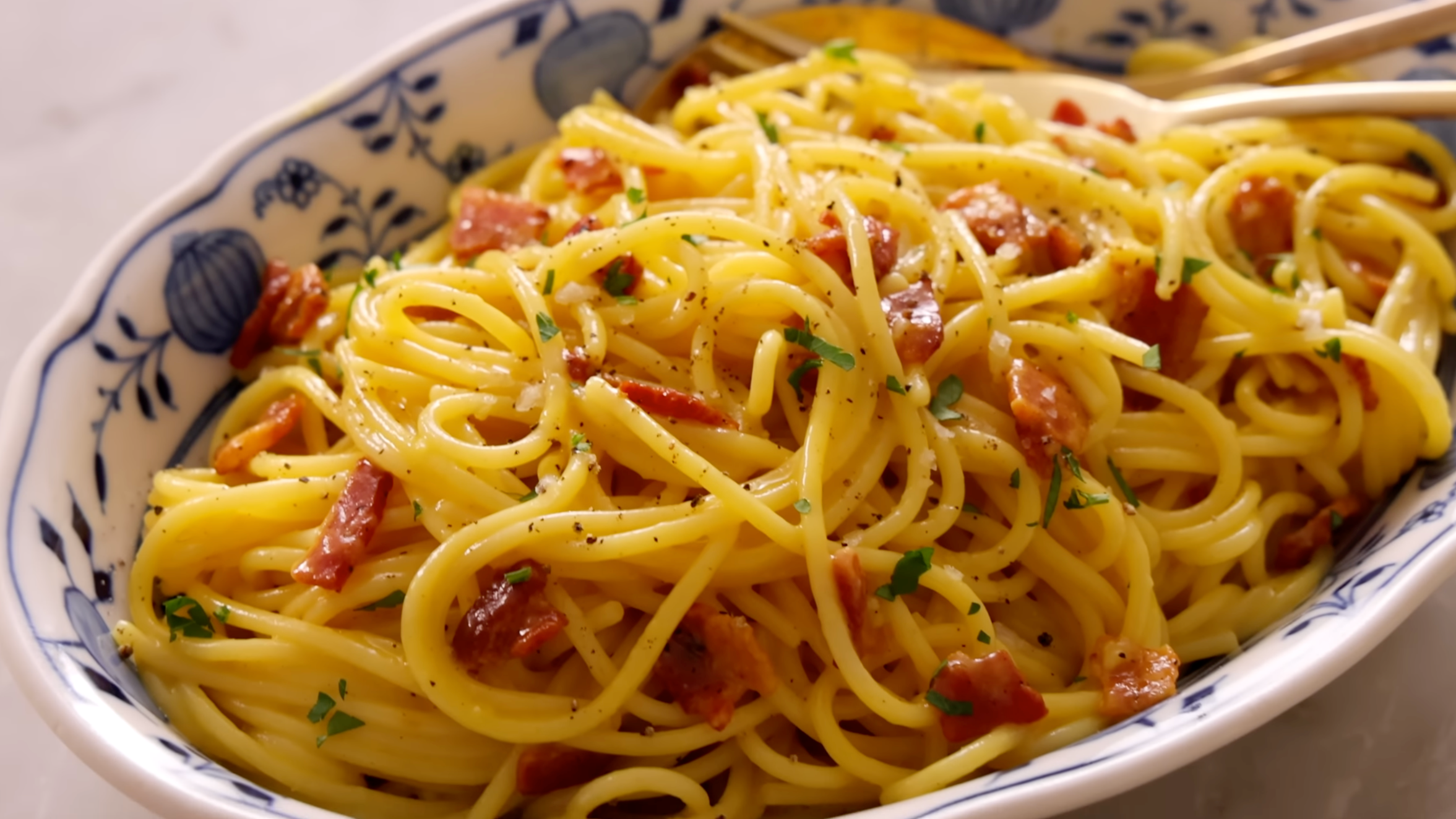
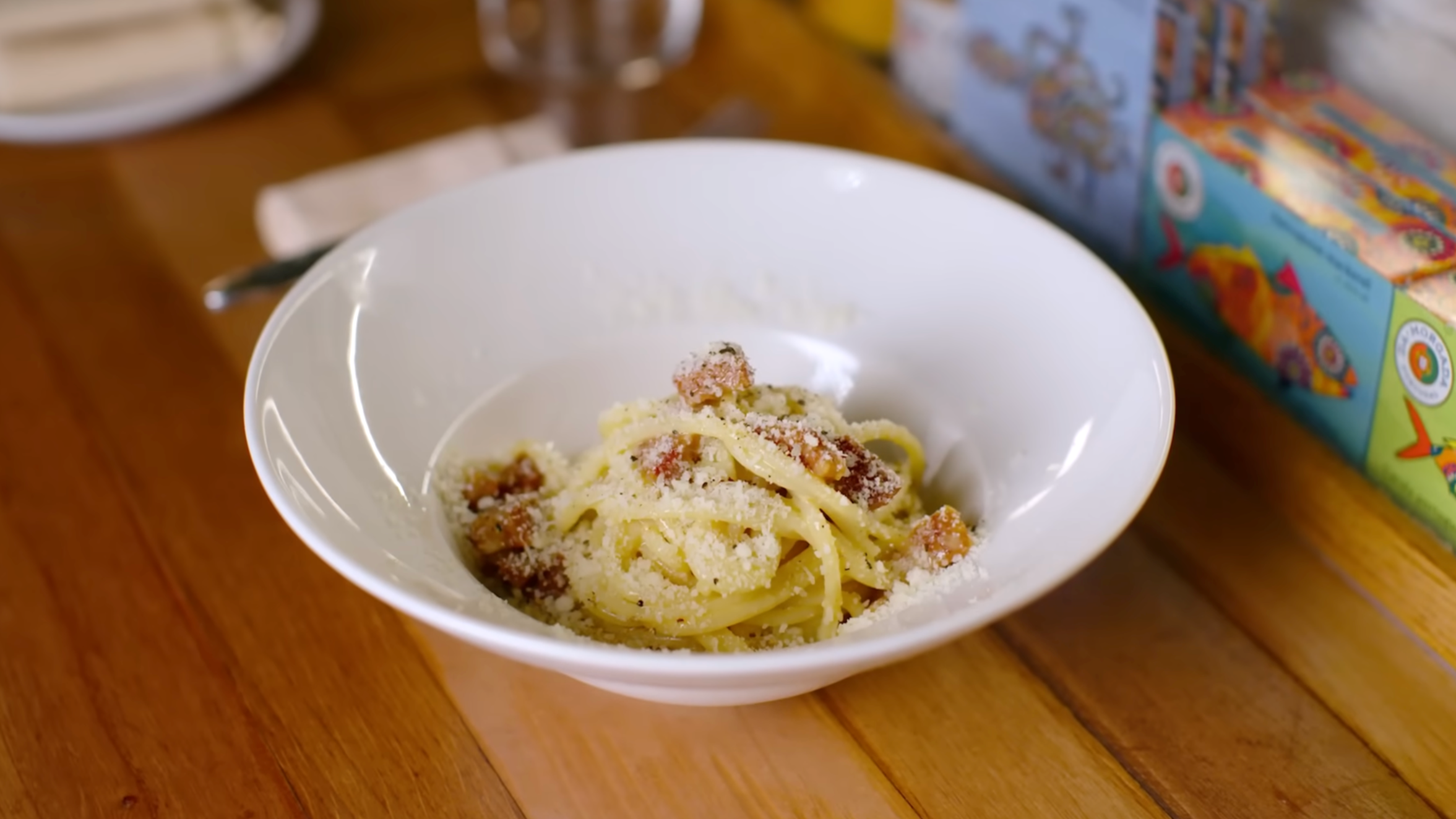
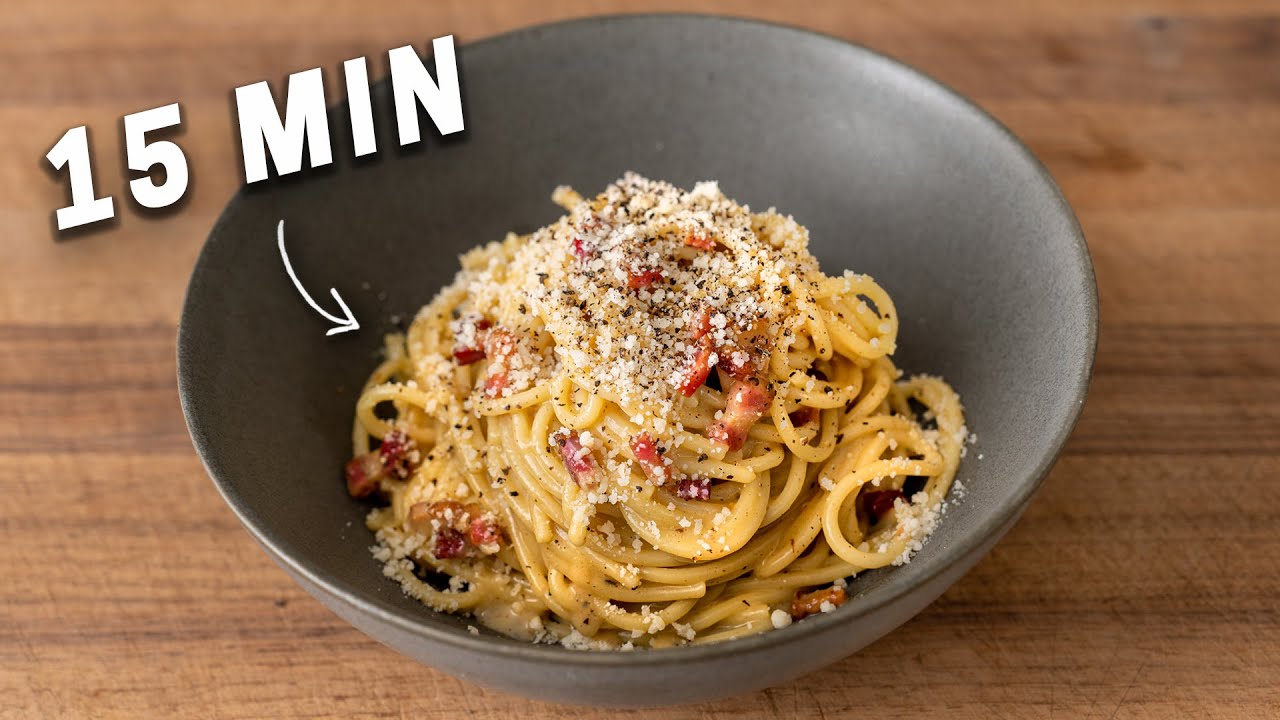
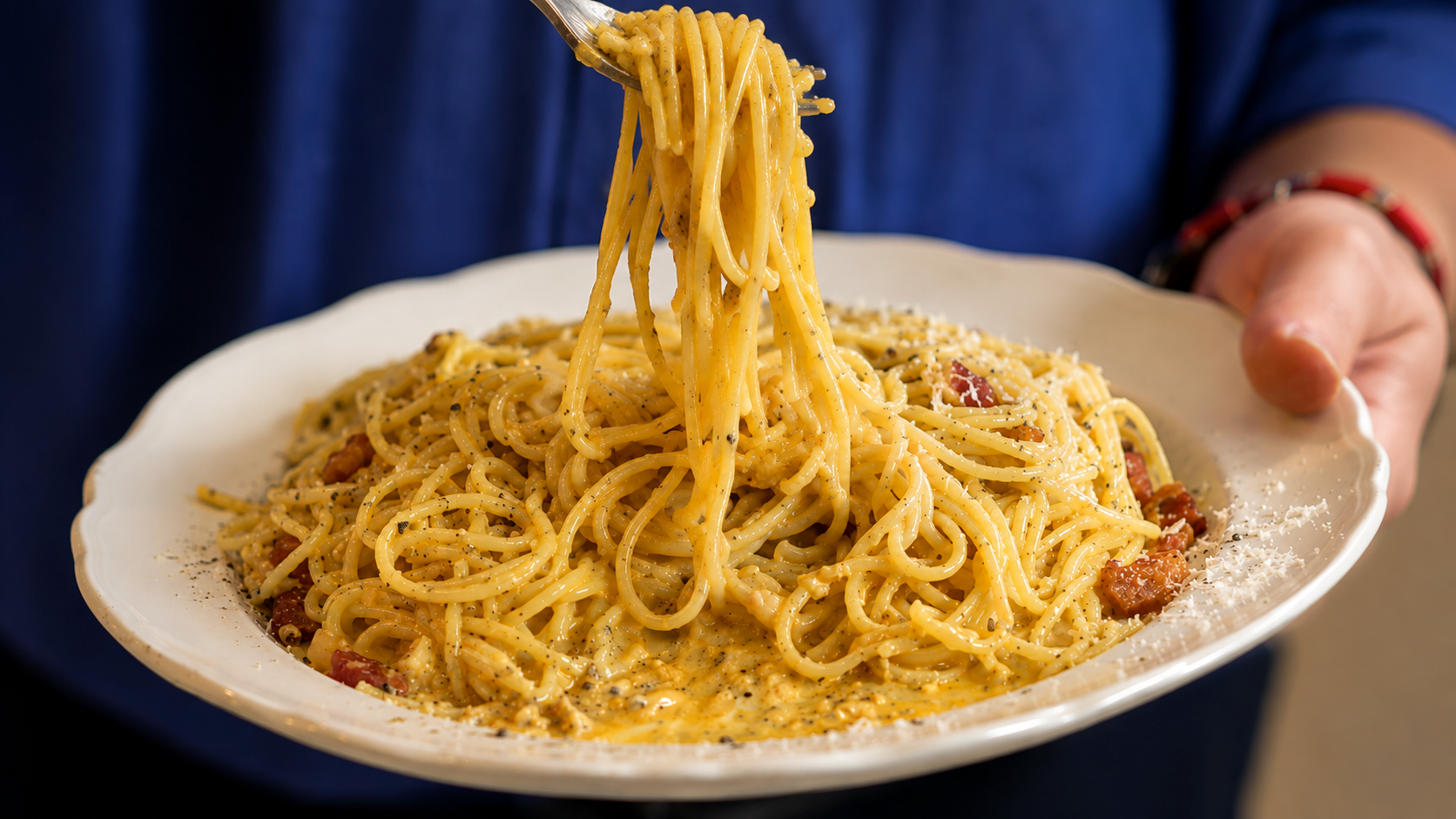
Spaghetti carbonara here uses rendered guanciale, pecorino and egg yolks tossed with spaghetti for a glossy, clingy sauce punctuated by cracked black pepper. Most cooks trip up by adding eggs to a pan that’s too hot or pouring egg onto sizzling noodles, which gives scrambled or fried textures; the community recommends mixing yolks separately and controlling pan temperature. FlavorArena analyzes hundreds of home-cook reports for this exact method — guanciale, yolks, pecorino, spaghetti — to surface which small technique changes keep the sauce creamy not curdled. You’ll get clear, evidence-backed tips on when to add the yolks and cheese, how to render guanciale without burning, and how much pasta water to save.

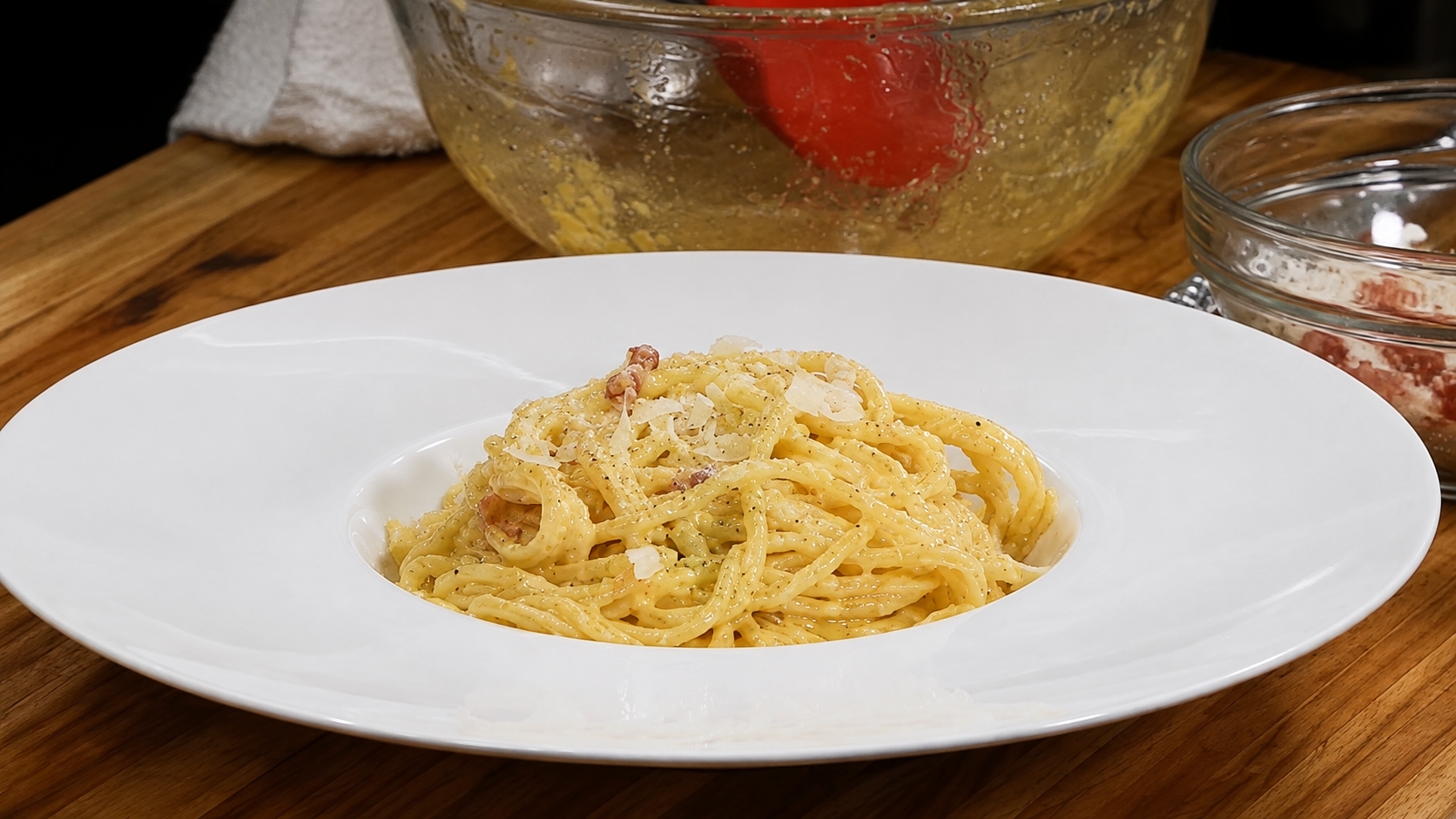
Real Spaghetti Carbonara | Antonio Carluccio

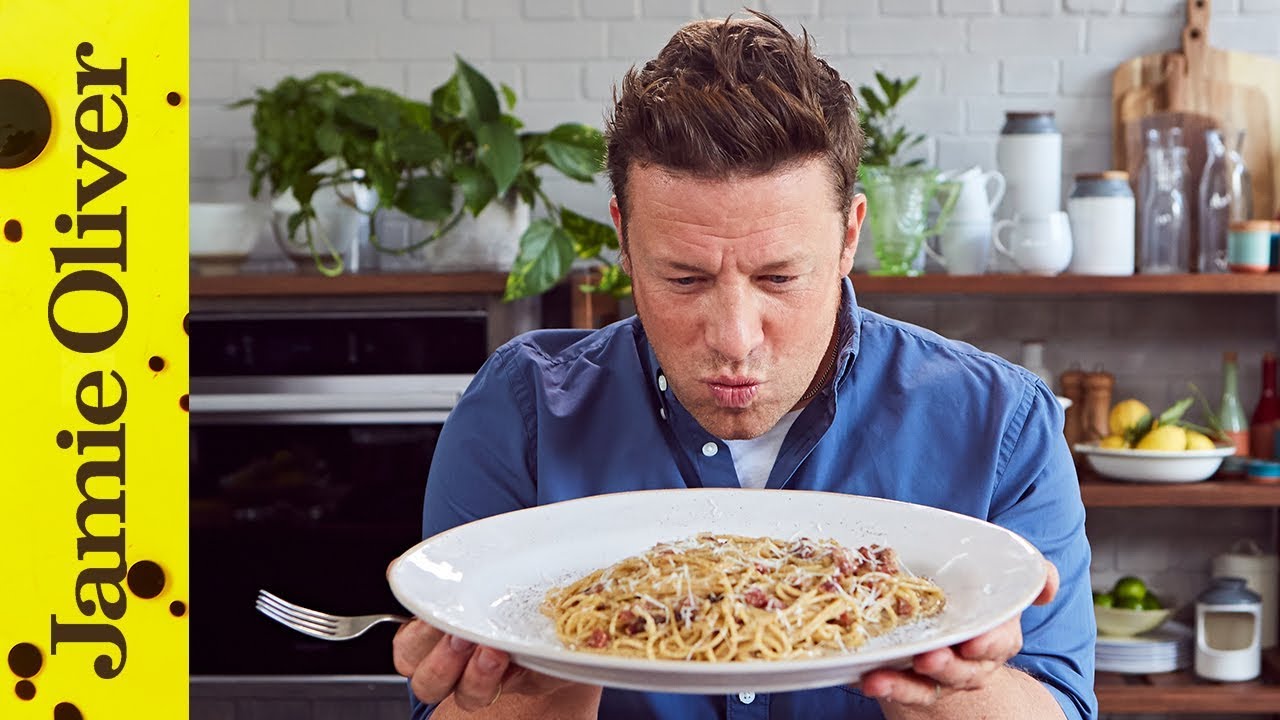
by Jamie Oliver

chef_hat Recipe Overview

Spaghettini is boiled in heavily salted water while large chunks of guanciale are cooked in a little olive oil until they render fat, forming the base of the sauce. Off the heat, beaten egg yolks stirred with grated parmesan and abundant black pepper (no cream or added salt) are tossed with the slightly cooled pasta and guanciale so the residual heat emulsifies a creamy coating, then finished with extra parmesan or pecorino and a final grind of pepper before serving.


  • thumb_up 373,443
  • visibility 24,955,067
  • chat_bubble Reliable Results, Repeat Worthy

grocery Ingredients You'll Need

  • black pepper
  • egg
  • guanciale
  • olive oil
  • Parmesan
  • salt
  • spaghettini

Real Spaghetti Carbonara | Antonio Carluccio

by Jamie Oliver

crowdsource Community Insights

This comes together fast, but most people who've made it trip over the eggs and the guanciale. People who cooked the guanciale without adding oil got crisp, rendered pieces and no extra grease. The big pitfall was adding raw egg straight into a hot pan, that often scrambled the sauce or left raw egg (a salmonella risk). Cooks who avoided trouble mixed only yolks or combined the eggs off the heat, then loosened the sauce with a splash of pasta water for a silky finish. If you want, finish with Pecorino Romano and plenty of cracked pepper.

military_tech Why This Recipe Stands Out

  • Reliable Results: It turns out well consistently, with few reported problems.
  • Repeat Worthy: People who make this tend to come back and make it again.
Advertisement modal-insights-video-details-119

grocery Ingredients

  • Water, boiling
  • 10 gram per litre of water salt
  • Spaghettini
  • Guanciale, cut into big chunks (or pancetta)
  • Olive oil, good quality
  • 2 egg, yolks only, beaten
  • Parmesan, grated (or pecorino)
  • Black pepper

book_ribbon Instructions

  1. Bring water to a rolling boil.
  2. Add salt to the boiling water at a ratio of 10 grams per litre of water.
  3. Add the spaghettini to the boiling water and cook; it takes a good ten minutes. Stir occasionally and do not add oil.
  4. If the pasta is still stiff after ten minutes, continue cooking another three or four minutes and check again.
  5. While the pasta cooks, cut the guanciale into big chunks.
  6. Heat a little good olive oil in a pan, then add the guanciale and cook until it renders fat; this is the beginning of the sauce.
  7. If the pan produces too much fat and you do not want it, absorb a little of the fat from the pan and remove it.
  8. If the guanciale or pan becomes too hot, turn off the heat under the guanciale to cool it down.
  9. In a bowl, beat the two eggs (for two people); use only the yolks and beat them.
  10. Add a bit of grated parmesan and abundant black pepper to the beaten yolks and stir to make the sauce. Do not add any cream. Do not add salt to this sauce because the guanciale is salty.
  11. When the pasta is ready, transfer the pasta into the pan with the guanciale and let it cool slightly so it is not too hot.
  12. Add the egg-parmesan-pepper mixture to the pasta off the direct heat and stir quickly to coat the pasta, using the residual heat to create a creamy sauce without scrambling the eggs.
  13. Finish with additional parmesan or pecorino and a final touch of pepper, then serve.

How to Make a Traditional Carbonara | Chef Jean-Pierre

by Chef Jean-Pierre

chef_hat Recipe Overview

Spaghetti is cooked al dente and transferred straight to a pan where it is tossed with slowly rendered guanciale fat and a little reserved, starchy pasta cooking water. Off the heat the pasta is quickly combined with a beaten egg mixed with Pecorino Romano, Parmigiano-Reggiano, and freshly cracked black pepper to form a creamy sauce without scrambling, then finished with extra Pecorino and pieces of cooked guanciale.


  • thumb_up 61,334
  • visibility 1,777,228

grocery Ingredients You'll Need

  • black pepper
  • egg
  • guanciale
  • parmigiano-reggiano
  • pasta cooking water
  • pecorino romano
  • salt

How to Make a Traditional Carbonara | Chef Jean-Pierre

by Chef Jean-Pierre
Advertisement modal-insights-video-details-122

grocery Ingredients

  • Spaghetti (or spaghettoni, bucatini)
  • Salt, to taste
  • Guanciale, skin removed (or pancetta, bacon)
  • Egg, beaten
  • Pecorino Romano
  • Parmigiano-Reggiano
  • Black pepper, freshly cracked
  • Pasta cooking water

book_ribbon Instructions

  1. Bring a large pot of water to a rolling boil, add a generous amount of salt.
  2. Add spaghetti to the boiling water without breaking the strands and do not add oil to the water.
  3. Cook the spaghetti until al dente; pasta takes about 10 to 12 minutes depending on the brand.
  4. While the pasta cooks, remove the skin from the guanciale with a fine knife.
  5. Place the guanciale in a pan without adding oil and cook slowly over low heat until the fat renders, about a minute or two.
  6. Crack and break the egg(s) and mix them with Pecorino Romano and Parmigiano-Reggiano to create the cheese-and-egg 'cream'; do not add salt to this mixture.
  7. Add freshly cracked black pepper to the egg-and-cheese mixture.
  8. When the guanciale fat has rendered and the pasta is cooked, reserve some salty pasta cooking water.
  9. Add a little pasta cooking water to the pan with the rendered guanciale fat.
  10. Transfer the cooked spaghetti directly from the pot to the pan (do not drain), and toss to coat with the fat.
  11. Remove the pan from high heat or keep the heat very low, then add the egg-and-cheese mixture and toss quickly and continuously to form a creamy sauce, taking care not to scramble the eggs.
  12. If needed, add a little more pasta cooking water to loosen the sauce and achieve a creamy texture.
  13. Finish with extra Pecorino Romano on top and arrange a few pieces of cooked guanciale over the plated pasta.
Advertisement single-mid-content

Chasing the Crown

Not every recipe can win—but every contender earned its place.

  1. Creamy Pasta Carbonara Recipe

    by Preppy Kitchen

    chef_hat Recipe Overview

    This recipe makes a spaghetti carbonara by whisking finely grated Parmesan or Pecorino Romano with one whole egg, three egg yolks, minced garlic, salt and cracked black pepper, then tempering that mixture with reserved pasta cooking water. Thick-cut bacon is diced and rendered until crispy, spaghetti is cooked al dente, and the tempered egg-and-cheese mixture and bacon are tossed with the hot pasta (adding more pasta water as needed) to form a creamy, silky sauce that is served immediately with parsley and flake sea salt.


    • thumb_up 6,754
    • visibility 205,291

    grocery Ingredients You'll Need

    • bacon
    • black pepper
    • egg
    • egg yolk
    • flake sea salt
    • garlic
    • parmesan / pecorino romano

    Creamy Pasta Carbonara Recipe

    by Preppy Kitchen
    Advertisement modal-insights-video-details-121

    grocery Ingredients

    • 1 cup Parmesan or Pecorino Romano, finely grated (or pecorino romano, parmesan)
    • 1 egg
    • 3 egg yolk, separated
    • 2 clove garlic, minced or pressed
    • 1/4 tsp salt
    • 1/4 tsp freshly cracked black pepper
    • 12 oz (340g) thick-cut bacon, diced small (or guanciale, pancetta)
    • 12 oz (340g) spaghetti
    • 1 cup pasta cooking water
    • Water
    • Parsley
    • Flake sea salt, to taste

    book_ribbon Instructions

    1. Fill a big pot with water, place over medium-high heat and bring to a boil; salt the pasta water well (it should taste like the ocean).
    2. Grate 1 cup (about 84 g) Parmesan or Pecorino Romano using a finer grater and place into a medium bowl.
    3. Add 1 whole egg and 3 egg yolks to the grated cheese.
    4. Add 2 cloves garlic (minced or pressed), 1/4 teaspoon salt, and 1/4 teaspoon freshly cracked black pepper to the egg and cheese.
    5. Whisk the cheese, eggs, garlic, and seasonings together and set the mixture aside.
    6. Dice 12 ounces (340 g) thick-cut bacon into small pieces.
    7. Heat a large pan over medium heat, add the diced bacon and cook until the fat renders and the bacon is nice and crispy; transfer the bacon to a paper towel-lined plate.
    8. When the pasta water is boiling, add about 12 ounces spaghetti and cook for about 10 minutes until al dente.
    9. Before draining, grab 1 cup of the pasta cooking water and set it aside.
    10. When the spaghetti is al dente, remove from heat and transfer the pasta to a big bowl.
    11. While whisking, pour 1/4 cup of the reserved pasta water into the egg and cheese mixture.
    12. Add the egg-and-cheese mixture and the cooked bacon to the steaming hot pasta and toss until the cheese is fully melted and the sauce is creamy and silky.
    13. If the pasta is not creamy enough, add an additional 1/4 cup of pasta water, a tablespoon at a time, while mixing until the desired texture is reached; avoid making it watery or dry.
    14. Serve the pasta carbonara immediately and garnish with a little parsley and flake sea salt if desired.
  2. How The Best Carbonara in NYC is Made | Made to Order…

    by Bon Appétit

    chef_hat Recipe Overview

    Thick spaghettoni is cooked al dente and tossed with a warm emulsified sauce made by combining egg yolks plus a half egg white with very finely grated Pecorino Romano and pecorino moliterno, coarsely toasted mixed peppercorns, and a spoonful of reserved rendered guanciale fat per person, then loosened with boiling, starchy pasta water. Cubes of guanciale are rendered in their own fat until dark and crispy, returned to the pasta, and the dish is finished by gently warming the sauce over hot water, emulsifying to a creamy consistency, and plating topped with extra guanciale and the ground pepper.


    • thumb_up 17,751
    • visibility 1,058,992

    grocery Ingredients You'll Need

    • egg white
    • egg yolk
    • guanciale
    • guanciale fat
    • mixed peppercorns
    • pasta cooking water
    • pecorino moliterno

    How The Best Carbonara in NYC is Made | Made to Order | Bon Appétit

    by Bon Appétit
    Advertisement modal-insights-video-details-120

    grocery Ingredients

    • Guanciale, skin and cracked-pepper rind removed, cut into cubes
    • 1 spoon guanciale fat, rendered
    • 2 egg yolk
    • 1/2 egg white
    • Pecorino romano, very finely grated
    • Pecorino moliterno, very finely grated
    • Mixed peppercorns, whole, toasted and coarsely ground (or black pepper (Sarawak))
    • Spaghettoni, thick spaghetti
    • Pasta cooking water, reserved, starchy

    book_ribbon Instructions

    1. Remove the black-pepper crust and the skin from the guanciale, then cut the guanciale into cubes sized to be crunchy outside and soft inside.
    2. Heat an iron pan or a regular pan over very high heat until hot.
    3. Put all the guanciale cubes into the hot pan, then immediately lower the heat to medium.
    4. Do not add extra virgin olive oil or butter; cook the guanciale in its own fat and avoid overcrowding. Cook until the pieces turn dark and are crispy but not burnt, then remove them to a bowl and reserve the rendered fat.
    5. In a separate pan, toast the mixed peppercorns over heat until the peppercorns start to jump, then remove and grind them coarsely (do not grind too fine).
    6. In a bowl (do not use a pan on direct heat), combine the egg yolks (2 for two people) and the half egg white, add finely grated pecorino romano and pecorino moliterno, the ground pepper, and one spoon of the reserved guanciale fat (one spoon per person).
    7. Add a little bit of boiling pasta water from the pot to the bowl and mix to melt the cheese and incorporate the fat.
    8. Leave the bowl over hot water so the steam gently warms the sauce and helps make it creamy without coagulating the eggs.
    9. Cook the spaghettoni in boiling water until al dente, reserving some pasta water.
    10. Add the cooked pasta to the bowl with the sauce and toss; add the guanciale pieces (avoid adding more fat).
    11. Emulsify the sauce by tossing the pasta and sauce together, adding small amounts of reserved starchy pasta water if needed, until the sauce is smooth and creamy but not watery.
    12. Plate the pasta by twirling with a spoon (and tongs if used), top with additional guanciale, and finish with the mixed ground pepper.
  3. How to Make Classic Carbonara | Jamie Oliver

    by Jamie Oliver

    chef_hat Recipe Overview

    Spaghetti carbonara with guanciale rendered in a pan, cracked black pepper, and an egg mixed with about 20 grams pecorino romano whisked and added off the heat. The cooked spaghetti and some pasta water are tossed with the guanciale fat and egg-pecorino mixture to emulsify into a creamy sauce, finished with extra pecorino and pepper.


    • thumb_up 212,938
    • visibility 18,105,751
    • Repeat Worthy

    grocery Ingredients You'll Need

    • black pepper
    • egg
    • garlic
    • guanciale
    • pecorino romano
    • salt
    • spaghetti

    How to Make Classic Carbonara | Jamie Oliver

    by Jamie Oliver

    crowdsource Community Insights

    This one can go sideways if you don't watch the heat: people who poured the egg mixture into a sizzling, too-hot pan ended up with scrambled eggs, so let the pan cool a touch or pull it off the heat before you add the eggs. Also, lots of cooks felt it needed more cheese, adding extra grated cheese after mixing makes the sauce richer. And people who used guanciale instead of bacon tended to like the result better; bacon works, but guanciale gives a deeper savory flavor.

    military_tech Why This Recipe Stands Out

    • Repeat Worthy: People who make this tend to come back and make it again.
    Advertisement modal-insights-video-details-116

    grocery Ingredients

    • Guanciale, skinned, chopped into 0.5 cm chunks (or smoked bacon, pancetta)
    • 20g pecorino romano (or parmesan)
    • 1 egg, free-range, organic
    • Spaghetti
    • Black pepper, coarsely cracked
    • Salt, to taste
    • Garlic, cracked

    book_ribbon Instructions

    1. Twist the spaghetti with both hands as you put it into the water to keep the strands from sticking together.
    2. Put a tiny amount of salt into the pasta water.
    3. Cook the spaghetti for eight minutes.
    4. Remove the skin from the guanciale, slice a roughly 1 centimeter piece, then roughly chop to about 0.5 centimeter chunks.
    5. Place the cold pan on medium-high heat so the guanciale will render its fat as it heats, then add the guanciale to the cold pan and let it heat until golden and the fat renders.
    6. Crack the garlic and add it to the pan with the guanciale to perfume the fat, then remove the garlic from the pan once perfumed.
    7. Put peppercorns in a pestle and mortar and crack them; use a small sieve to separate and collect the inner cracked cores (the hotter part) for the dish.
    8. Crack one egg into a bowl and add about 20 grams of pecorino romano, then whisk the mixture until combined.
    9. Turn the heat off under the pan and add the cooked spaghetti along with some of the pasta cooking water to the pan to stop the frying.
    10. Add the egg and pecorino mixture to the pasta off the heat and toss continuously, adding more pasta water as needed to emulsify the guanciale fat and water into a creamy sauce.
    11. Finish the carbonara with more cracked black pepper and a little extra pecorino romano.
  4. The Best Pasta Carbonara You’ll Ever Make (Restaurant-Quality) | Epicurious 101

    by Epicurious

    chef_hat Recipe Overview

    Toasted black peppercorns are coarsely crushed and mixed with finely grated Parmesan and Pecorino, then whisked into three room-temperature whole eggs and two additional yolks to form a thick egg-and-cheese mixture. Al dente spaghetti is drained with some reserved cooking water and tossed with rendered guanciale and its fat, then vigorously mixed with the egg-and-cheese mixture and a little pasta water to emulsify into a creamy sauce that coats the noodles, finished with extra grated cheeses and more toasted black pepper.


    • thumb_up 21,111
    • visibility 1,029,244

    grocery Ingredients You'll Need

    • black peppercorns
    • chicken egg
    • egg yolk
    • guanciale
    • olive oil
    • Parmesan
    • pecorino romano

    The Best Pasta Carbonara You’ll Ever Make (Restaurant-Quality) | Epicurious 101

    by Epicurious
    Advertisement modal-insights-video-details-118

    grocery Ingredients

    • Black peppercorns, toasted then crushed
    • Parmesan cheese, finely grated
    • Pecorino cheese, finely grated
    • 3 egg, room temperature, whole
    • 2 egg yolk, room temperature, separated
    • Guanciale, cut into thick matchsticks / large chunks (or pancetta, bacon)
    • Olive oil
    • Spaghetti, dry
    • Salt, to taste

    book_ribbon Instructions

    1. Toast the black peppercorns in a dry pan over medium-low heat, moving them so they toast evenly; remove when you smell them and hear the first little pops.
    2. Spread the toasted peppercorns on a tray to cool.
    3. Crush the cooled toasted peppercorns by pressing and rolling with the pan and body weight until fragrant and textured; do not grind them super fine.
    4. Grate the Parmesan and Pecorino finely using a microplane so the cheese is very fine.
    5. Set whole eggs out on the counter for about a half hour to come to room temperature.
    6. Separate eggs: crack each egg in half and pass the yolk between the shells until the white runs away; reserve 3 whole eggs and 2 additional yolks as stated.
    7. Whisk the whole eggs and egg yolks together with the grated cheeses in a mixing bowl until smooth, thick, and homogeneous.
    8. Add a little of the crushed toasted black pepper to the eggs-and-cheese mixture, including some fine ground and some larger chunks; set this mixture aside.
    9. Bring a large pot of water to a boil and add salt so the water is essentially sea-salty.
    10. Cook the dry spaghetti in the boiling salted water about 10 minutes, stirring occasionally, until al dente (a little bite); test a strand to confirm doneness.
    11. While the pasta cooks, heat a pan, add a little olive oil, then add the cut guanciale and cook until light golden brown and sizzling but not crisp, leaving the fat rendered in the pan.
    12. When the pasta is done, drain it but retain a little of the starchy pasta cooking water.
    13. Place the hot drained pasta into the bowl with the egg-and-cheese mixture, add a little reserved pasta water to start cooking the eggs, then add the guanciale and all its rendered fat.
    14. Using tongs, mix vigorously in the bowl to emulsify the fat, cheese, eggs, and pasta until the sauce is creamy and coats the spaghetti, taking care to avoid scrambling the eggs.
    15. Taste and finish with additional grated Pecorino and Parmesan and more toasted black peppercorns as desired; serve immediately while hot.
  5. Carbonara | Basics with Babish

    by Binging with Babish

    chef_hat Recipe Overview

    Pasta (bucatini in one version) is cooked in very heavily salted water, then dumped directly into the pan of rendered guanciale or thick-cut bacon and tossed in the fat before a beaten mixture of three large eggs and one yolk with finely grated Pecorino Romano and Parmigiano-Reggiano and lots of freshly ground black pepper is worked in vigorously to emulsify a creamy sauce using starchy pasta cooking water to loosen and prevent curdling. The recipe offers two parallel methods: with guanciale it is rendered slowly and kept from over-crisping, while the bacon version strains off most fat, sautés garlic briefly in about two tablespoons of reserved bacon fat, and produces a lighter sauce finished with the reserved meat and extra grated cheese.


    • thumb_up 275,932
    • visibility 11,725,926
    • Repeat Worthy

    grocery Ingredients You'll Need

    • bacon
    • black pepper
    • bucatini
    • egg
    • egg yolk
    • garlic
    • guanciale

    Carbonara | Basics with Babish

    by Binging with Babish

    crowdsource Community Insights

    This comes together fast and tastes pleasantly rich, and people keep making it again — but the trick is texture, not timing. Don’t add salt to the finished pasta. Save some pasta water and use it to loosen the sauce so it coats the noodles. Keep the pan at low–medium heat when you finish the sauce; if it’s too hot the eggs will scramble and the texture goes chalky. Don’t add cream — that was a common misstep. If you want small, optional tweaks: a teaspoon of fresh lemon brightens things, a handful of peas adds a touch of sweetness, or extra grated cheese and black pepper on the plate is nice. Otherwise focus on gentle heat and pasta water and you’ll get the result this recipe intends.

    military_tech Why This Recipe Stands Out

    • Repeat Worthy: People who make this tend to come back and make it again.
    Advertisement modal-insights-video-details-117

    grocery Ingredients

    Traditional Carbonara

    • 1/2 lb (227 g) Guanciale, cut into relatively sizable chunks (or pancetta, thick-cut bacon)
    • 3 Eggs, large
    • 1 Egg yolk
    • 4 oz (113 g) Pecorino Romano and Parmigiano-Reggiano, finely grated
    • Freshly ground black pepper
    • Salt, to taste
    • Pasta
    • 1/4 cup Pasta cooking water, starchy

    Modern / Less Traditional Carbonara

    • 1/2 lb (227 g) Thick-cut bacon, sliced into big chunks
    • 1/4 oz (7 g) Parmesan, finely grated
    • Pecorino Romano, finely grated
    • 3 Eggs, large
    • 1 Egg yolk
    • Bucatini
    • Garlic
    • 1/3 cup Pasta cooking water, starchy
    • Salt, to taste
    • Freshly ground black pepper
    • 2 tbsp Rendered bacon fat

    book_ribbon Instructions

    Traditional Carbonara

    1. Finely grate and measure out 4 ounces of cheese.
    2. In a medium bowl or measuring cup combine 3 large eggs, 1 egg yolk, the grated cheese, and a whole lot of freshly ground black pepper; beat with a fork until homogenous.
    3. Place the guanciale in a cold pan and turn the heat to medium; cook slowly to render fat until the guanciale is fully cooked but not too crispy, then kill the heat.
    4. Bring a pot of water to boil and season it very heavily (as salty as the sea); keep the pasta moving while it cooks to prevent sticking and test doneness by tasting a strand.
    5. As soon as the pasta is done, dump it directly into the sauté pan with the guanciale and toss to coat the pasta evenly in the guanciale fat.
    6. Work quickly and add the egg-and-cheese mixture to the hot pasta, then agitate rigorously to emulsify the sauce and prevent curdling; rely on the residual heat from the pasta to cook the eggs.
    7. If the sauce is not as smooth as desired, add a little pasta water, about 1/4 cup, to loosen and emulsify.
    8. Taste for seasoning and add salt if needed. Optionally toss the pasta to aerate the sauce and make it creamier.
    9. Plate the pasta and top with the remaining guanciale and any remnants of the creamy sauce.

    Modern / Less Traditional Carbonara

    1. Grate Parmesan and Pecorino Romano into a bowl with 3 eggs and 1 egg yolk; season with a few healthy twists of freshly ground black pepper and beat with a fork until combined.
    2. Slice about 1/2 a pound of thick-cut bacon into big chunks.
    3. Place the bacon in a cold nonstick pan and cook to render the fat until the bacon is fully cooked; strain off all but about 2 tablespoons of bacon fat and leave that fat in the pan.
    4. Return the pan with 2 tablespoons fat to medium-low heat, add the garlic, and sauté for 1 minute until fragrant; then kill the heat.
    5. Add the bucatini to very heavily salted boiling water (use the presented palm technique if desired) and cook until done; keep the pasta moving to prevent sticking.
    6. Add the cooked pasta directly to the pan, then add about 1/3 cup of starchy pasta water to help the sauce cohere.
    7. Add the egg-and-cheese mixture to the pasta and agitate vigorously; if the pan is too small, dump everything back into the emptied pasta pot and keep moving to avoid scrambling the eggs.
    8. Taste for seasoning and add salt and pepper as necessary. If the sauce is not thick enough, rescue it by adding maybe another 1/4 ounce of finely grated Parmesan and mix rigorously.
    9. Plate the pasta and serve; note this version has a lighter sauce with less fat and stays creamier longer.
  6. Easy Carbonara in 15 Minutes

    by Brian Lagerstrom

    chef_hat Recipe Overview

    Spaghetti is boiled, then finished in a Dutch oven where small-diced thick-cut bacon is rendered and its fat is toasted with freshly ground black pepper, the pot is deglazed with reserved hot pasta water and the pasta briefly simmers in a shallow starchy liquid. A mixture of shredded Parmigiano Reggiano, Pecorino Romano, one whole egg and three yolks—tempered with hot pasta water—is stirred into the pasta off the heat and vigorously tossed to form a silky, emulsified cheese-and-egg sauce, then topped with the reserved crisp bacon, extra Parmesan, and more cracked black pepper.


    • thumb_up 39,445
    • visibility 1,900,176

    grocery Ingredients You'll Need

    • bacon
    • black pepper
    • egg
    • egg yolk
    • olive oil
    • parmigiano-reggiano
    • pecorino romano

    Easy Carbonara in 15 Minutes

    by Brian Lagerstrom
    Advertisement modal-insights-video-details-123

    grocery Ingredients

    • 12 oz (340g) spaghetti
    • 4 thick-cut bacon, small diced (or guanciale)
    • Olive oil
    • Salt, to taste
    • 50g Parmigiano Reggiano, shredded
    • 50g Pecorino Romano, shredded
    • 1 large egg
    • 3 large egg yolks
    • 1 1/2 cup pasta cooking water
    • 1/2 tsp black pepper, freshly ground (or pre-ground black pepper)

    book_ribbon Instructions

    1. Bring a 12-inch sauté pan full of water to a boil on high heat.
    2. Warm a heavy-bottomed 6.5-quart Dutch oven over low heat.
    3. Cut four pieces (about 8 ounces / 225 grams) of thick-cut bacon: cut each piece in half, cut the halves lengthwise, then dice to small pieces.
    4. Add a little olive oil to the preheated Dutch oven, then add all of the diced bacon and stir to spread it out.
    5. Add a strong pinch of salt to the boiling pasta water, then add 12 ounces of spaghetti, spread the strands as you drop them in, and use tongs to fully submerge.
    6. Simmer the spaghetti on high for 8 minutes.
    7. Grate 50 grams Parmigiano Reggiano on the feather side of a box grater and place in a bowl.
    8. Grate 50 grams Pecorino Romano on the feather side of a box grater and add to the same bowl.
    9. Add 1 whole large egg and 3 large egg yolks to the bowl with the cheeses and stir to combine until the mixture is very runny (like polenta or runny scrambled eggs).
    10. Pre-grind black pepper (aim about 1 gram per portion or about 1/2 teaspoon for the whole dish).
    11. Cook the bacon, stirring occasionally, until fully rendered and crisp (this will take about the same amount of time as the pasta cooks).
    12. When the bacon is done, transfer it to a plate but keep the fat in the Dutch oven.
    13. Add the freshly ground black pepper to the fat in the Dutch oven, stir to toast briefly, and scrape up any fond from the bottom of the pot with a wooden spoon (limit scraping to about 10–15 seconds).
    14. Taste the spaghetti at 8 minutes for a pre-al dente bite then ladle about 1.5 cups (300 mL) of pasta water into the Dutch oven to help deglaze and form the sauce base.
    15. Use tongs to transfer the spaghetti from the sauté pan into the Dutch oven.
    16. Reserve additional pasta water: pour off about 500 mL into a container (you will probably only need about 200–250 mL).
    17. Add 100 mL (about a half cup) of reserved hot pasta water into the egg-cheese mixture and stir to combine to temper the eggs.
    18. Add another 100 mL (about a half cup) of reserved pasta water to the Dutch oven so the pasta is sitting in roughly an inch and a half of liquid; stir to mobilize starch.
    19. Simmer the pasta in the shallow liquid for about 90 seconds, then taste for final doneness.
    20. Take the Dutch oven off the heat, add the reserved rendered bacon and any fat from the plate, and stir to combine.
    21. Add the egg-and-cheese mixture to the pasta and immediately stir vigorously with tongs so the eggs cook evenly and the cheese melts evenly.
    22. If the Dutch oven has cooled and the sauce is looser than desired, return it to the lowest possible heat and stir constantly for 30–60 seconds, or until the sauce thickens to a silky, velvety consistency without becoming gloppy or scrambled.
    23. Finish by placing additional bacon on top, sprinkling a big pinch of aged Parmesan, and adding a few cranks of fresh cracked black pepper.
  7. Molly Makes BA’s Best Bucatini Carbonara | From the Test Kitchen |…

    by Bon Appétit

    chef_hat Recipe Overview

    Guanciale is diced and gently rendered until golden, then cooled and added to a bowl with one whole egg and seven egg yolks whisked without incorporating air. Hot drained bucatini is immediately stirred into the egg-and-guanciale mixture with reserved rendered guanciale fat and pasta water to form a glossy emulsion, pecorino and Parmesan are folded in gradually, and the pasta is finished with a large amount of ground black pepper and extra cheese before nesting and serving.


    • thumb_up 68,841
    • visibility 3,888,110

    grocery Ingredients You'll Need

    • black pepper
    • bucatini
    • egg
    • egg yolk
    • guanciale
    • Parmesan
    • pasta cooking water

    Molly Makes BA’s Best Bucatini Carbonara | From the Test Kitchen | Bon Appétit

    by Bon Appétit
    Advertisement modal-insights-video-details-124

    grocery Ingredients

    • 1/4 lb (113g) guanciale, cut into 1/3-inch dice
    • Guanciale fat, rendered and reserved
    • 1 egg, whole (or all egg yolks, all whole eggs)
    • 7 egg yolk, separated
    • Bucatini
    • Salt, to taste
    • 1/2 cup pasta water, reserved
    • Pecorino (or Parmesan)
    • Parmesan (or Pecorino)
    • Black pepper, ground

    book_ribbon Instructions

    1. Cut the guanciale into 1/3-inch dice (about a quarter pound).
    2. Preheat a pan over medium-low heat and sauté the guanciale until it is golden brown and a lot of fat has rendered; remove the cooked guanciale and save the drippings (rendered guanciale fat). Let the guanciale cool.
    3. In a bowl, add one whole egg and seven egg yolks and whisk until homogeneous without incorporating air (do not whip).
    4. Add the cooled guanciale to the bowl with the egg mixture.
    5. Bring a large pot of water to a boil and add a very large amount of salt to season the water.
    6. Drop the bucatini into the boiling water, stir, and cook in the pot — check after about six minutes; if there is still a little white ring, cook one more minute before draining.
    7. Reserve about a half cup of the pasta cooking water, then drain the pasta.
    8. Immediately add the hot drained pasta to the bowl with the egg and guanciale and start stirring right away.
    9. Add some of the reserved rendered guanciale fat and a little of the reserved pasta water to the bowl to help thin the sauce and create an emulsion.
    10. Add a mix of pecorino and Parmesan gradually, stirring and tossing until the sauce becomes super glossy and coats the noodles; if the sauce becomes too thick, add more pasta water as needed.
    11. Add a large amount of ground black pepper to cut the creaminess and taste for salt (the guanciale and cheeses are salty, so add only a little salt if needed).
    12. Use tongs to lift and nest the pasta, letting any danglers drop off, finish with additional cheese for good measure and one grind of black pepper, and serve.
  8. How Italians Make Real Spaghetti Carbonara

    by Nick's Kitchen

    chef_hat Recipe Overview

    A semolina-dusted fresh pasta dough made with flour and whole eggs is kneaded, rested, rolled through a pasta machine to setting six, then cut on a chitarra into square-sided strands and cooked for 60 seconds. Crisp guanciale lardons are rendered and, off the heat, combined with whole eggs, reserved yolks, freshly grated pecorino, and lots of cracked black pepper; the hot, drained pasta is tossed into the guanciale and mixed with reserved pasta water to form a glossy egg‑cheese sauce, then plated and finished with browned pecorino breadcrumbs (pan cortado), a tiny dusting of parsley, and more black pepper.


    • thumb_up 14,819
    • visibility 843,635

    grocery Ingredients You'll Need

    • black pepper
    • breadcrumbs
    • egg
    • egg yolk
    • flour
    • guanciale
    • olive oil

    How Italians Make Real Spaghetti Carbonara

    by Nick's Kitchen
    Advertisement modal-insights-video-details-125

    grocery Ingredients

    Fresh pasta

    • Flour
    • 2 eggs
    • 2 egg yolks, separated
    • Semolina

    Pan cortado (crispy breadcrumb topping)

    • Olive oil
    • Breadcrumbs
    • Pecorino cheese, grated

    Sauce & assembly

    • Guanciale, cut into lardons (or pancetta, bacon)
    • Pecorino cheese, grated
    • Black pepper, freshly cracked
    • Salt, to taste
    • Reserved pasta water, reserved, hot
    • Parsley

    book_ribbon Instructions

    Fresh pasta

    1. Pile flour onto a cutting board and press a bowl or your fingers into the center to form a well.
    2. Crack two whole eggs into the well and separate out the additional egg yolks to reserve.
    3. Whisk the eggs in the well and gradually pull in flour from the edges until the mixture thickens and will no longer run.
    4. Pull the dough together using a bench scraper and your hands until it becomes dry and crumbly, then knead the dough by pushing, rolling, and folding with the palm of your hand until the dough is silky smooth (knead for about ten minutes).
    5. If the dough feels too dry, add tiny sprinkles of water bit by bit until workable.
    6. Cover the dough with plastic wrap or a damp towel and let rest at room temperature for between 1 and 3 hours.
    7. Remove the cover and cut the rested dough into four even pieces, keeping unused pieces covered so they do not dry out.
    8. Press one piece slightly flat and pass it through a pasta machine on the widest setting, folding it over itself as needed to remove air bubbles; continue rolling the dough progressively until you reach setting number six.
    9. Dust the rolled pasta sheets with semolina to prevent sticking.
    10. Cut the sheets to fit the center of the chitarra and roll over the chitarra to cut the pasta into even square-sided strands; toss the cut spaghetti immediately in semolina to coat and prevent sticking.

    Pan cortado (crispy breadcrumbs)

    1. Heat olive oil in a pan over low heat and add breadcrumbs.
    2. Stir continuously until the breadcrumbs are golden brown and crispy, then shift the pan off the heat.
    3. Add a sprinkle of grated pecorino to the hot breadcrumbs and mix to combine.
    4. Transfer the pan cortado to a paper towel–lined baking sheet to soak up excess oil and set aside.

    Guanciale and sauce finish

    1. Grate pecorino cheese fresh by hand; do not use pre-grated cheese.
    2. Cut guanciale into strips (lardons) and place them in a cold pan.
    3. Render the guanciale slowly over low heat until the fat melts and you have crispy morsels and rendered fat in the pan; do this for about ten minutes.
    4. Turn off the heat and add two whole eggs and the two reserved egg yolks to the pan.
    5. Add grated pecorino and a lot of freshly cracked black pepper to the eggs and whisk to combine into an egg-cheese mixture.
    6. Bring a pot of pasta water to dissolve plenty of salt, then cook the fresh pasta in the salted water for 60 seconds, stirring to prevent sticking.
    7. Reserve some hot pasta water before draining.
    8. Transfer the cooked pasta from the pot into the guanciale pan off the heat (do not cook over flame).
    9. Add the egg and cheese mixture to the pan and begin mixing quickly.
    10. Add hot reserved pasta water bit by bit while mixing constantly to gently cook the eggs and melt the cheese, aiming for a creamy sauce without scrambling the eggs.
    11. If the sauce does not thicken, you may briefly apply and remove low heat while stirring, being careful to avoid scrambling the eggs.
    12. Continue mixing and adding small splashes of pasta water until the sauce is glossy, velvety, and cohesive.
    13. Plate the pasta and top with the pan cortado, a tiny dusting of parsley, and, if desired, a final smallest dusting of fresh cracked black pepper.