Skip to content
  1. Making The Perfect Fettuccine Alfredo (3 Ways)

    by Joshua Weissman

    chef_hat Recipe Overview

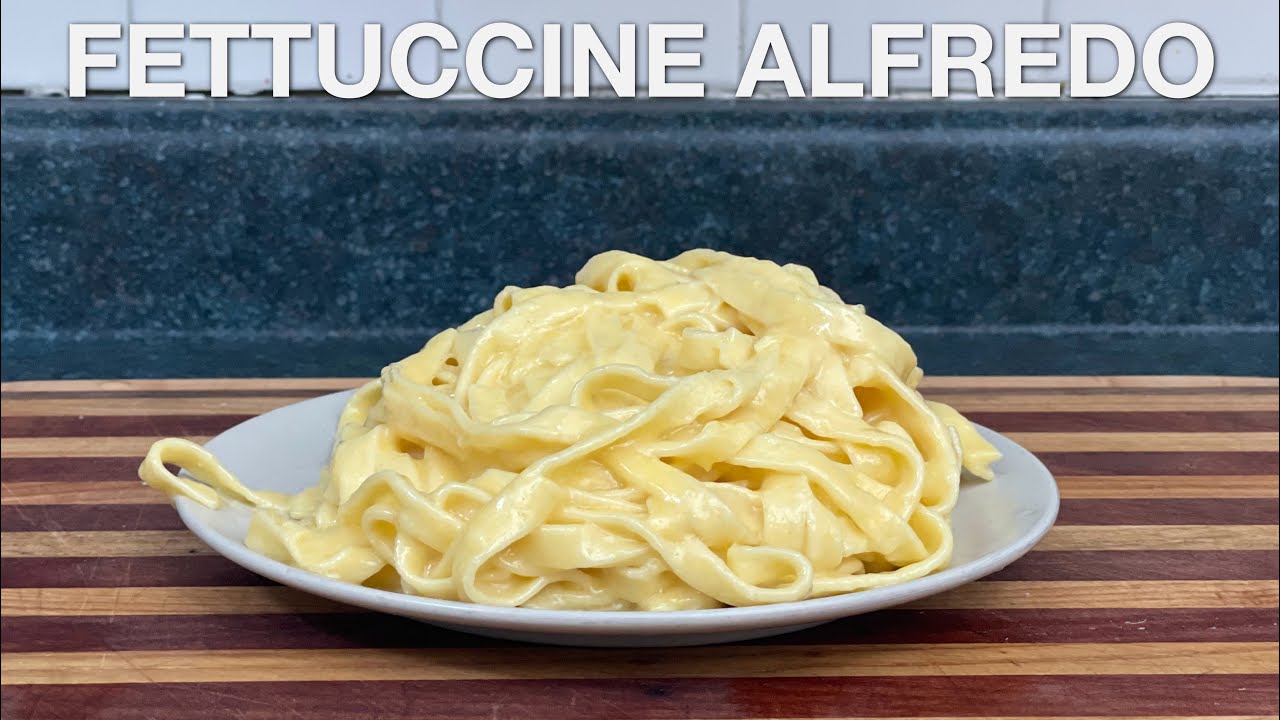
    Three variations of fettuccine alfredo are made and served: a traditional fettuccine al burro where hot pasta is emulsified with softened butter and fresh grated Parmigiano-Reggiano and finished with pasta water, an Americanized cream-based Alfredo made by simmering heavy cream and butter then adding Parmigiano, thyme, and garlic and tossing with pasta, and a 'caulifredo' where cooked cauliflower is blended with milk, butter, garlic, thyme, and Parmigiano to make a sauce that is tossed with fettuccine and topped with more Parmigiano and black pepper.


    • thumb_up 123,227
    • visibility 5,028,894
    • Repeat Worthy

    grocery Ingredients You'll Need

    • black pepper
    • cauliflower
    • fettuccine
    • garlic
    • heavy cream
    • milk
    • parmigiano-reggiano

    Making The Perfect Fettuccine Alfredo (3 Ways)

    by Joshua Weissman

    crowdsource Community Insights

    This comes together pretty fast, but people who made it ran into a couple of predictable things. First, salt the pasta water, but not as much as the ocean. People who oversalted found the dish became too salty. Second, cheese can clump up if you don't bring it together the right way; the ones who rescued it stirred in a splash of hot pasta water to emulsify the sauce and smooth the cheese. If you want a lighter finish, some cooks used about half the butter instead of a whole stick and liked it.

    military_tech Why This Recipe Stands Out

    • Repeat Worthy: People who make this tend to come back and make it again.
    Advertisement modal-insights-video-details-195

    grocery Ingredients

    Fettuccine al burro (original)

    • 14 oz (397g) fettuccine, dried
    • 1/2 cup unsalted butter, softened
    • 2 cup parmigiano-reggiano, fresh grated (or nutritional yeast)
    • Salt, to taste
    • Black pepper, to taste

    Americanized Alfredo (cream-based)

    • 14 oz (397g) fettuccine, dried
    • 1 1/4 cup heavy cream
    • 1/2 cup unsalted butter
    • 2 cup parmigiano-reggiano, grated (or nutritional yeast)
    • 2 tsp thyme, finely chopped
    • 5 clove garlic, very finely chopped
    • Salt, to taste
    • Black pepper, to taste

    Healthy-ish herb fettuccine (caulifredo)

    • 2 1/2 cup cauliflower florets
    • 1 cup milk (or whole milk, nut milk)
    • 1 tbsp unsalted butter
    • 3 clove garlic
    • 2 tsp thyme, finely chopped
    • 1/2 cup parmigiano-reggiano, grated (or nutritional yeast)
    • 14 oz (397g) fettuccine, dried
    • Salt, to taste
    • Black pepper, to taste

    book_ribbon Instructions

    Fettuccine al burro (original)

    1. Bring a pot of water to a boil and season very generously with salt.
    2. Cook 14 ounces (400 grams) of dried fettuccine according to the package's instructions or until al dente, tasting as it cooks.
    3. Reserve about three quarters of a cup (175 milliliters) of the pasta water, then drain the pasta.
    4. Place half a cup (115 grams) of softened unsalted butter into a large bowl that can easily fit the pasta.
    5. Immediately add the hot drained pasta to the butter and toss vigorously.
    6. When the butter is almost fully melted, add 2 cups (250 grams) of fresh grated parmigiano-reggiano and continue tossing vigorously.
    7. Use the reserved pasta water as needed to melt the cheese and thin the sauce to a creamy white emulsion that coats the noodles.
    8. Season to taste with salt and pepper.
    9. Serve in a bowl and top with additional parmigiano-reggiano and black pepper to taste.

    Americanized Alfredo (cream-based)

    1. Bring a pot of water to a boil and cook 14 ounces (400 grams) of dried fettuccine as directed on the package.
    2. Separately, in a large pan combine 1 and a quarter cups (300 milliliters) heavy whipping cream and half a cup (115 grams) unsalted butter.
    3. Turn the heat to medium and stir constantly until the butter is melted.
    4. Increase the heat slightly above medium and bring the mixture to a gentle simmer.
    5. Let simmer, stirring occasionally, for 3 to 4 minutes or until it starts to lightly thicken.
    6. Cut off the heat and add 2 cups (250 grams) parmigiano-reggiano, 2 teaspoons (4 grams) finely chopped thyme, and 5 cloves garlic that have been very finely chopped.
    7. Vigorously stir until thoroughly combined and emulsified, then season to taste with salt and pepper.
    8. When the pasta is done, reserve a half cup (120 milliliters) of pasta water and drain the pasta.
    9. Immediately add the hot pasta to the alfredo sauce and toss, using the reserved pasta water as needed to emulsify the sauce further (you'll likely use about half of the reserved pasta water, i.e. a quarter cup or potentially more).
    10. Use a carving fork and a ladle to twirl and plate the pasta into a plate or shallow bowl, and immediately top with a fresh grating of parmigiano-reggiano and a crack of black pepper.

    Healthy-ish herb fettuccine (caulifredo)

    1. Remove stems from a head of cauliflower and acquire about two and a half cups of cauliflower florets (about half of a medium head).
    2. Put the florets into a medium-sized sauce pot with 1 cup (240 milliliters) of milk and 1 tablespoon (14 grams) unsalted butter.
    3. Bring to a boil over medium heat, then reduce to medium-low and simmer covered (with a lid or foil) for 12 to 15 minutes or until the cauliflower is completely mushy.
    4. Remove from the heat and pour the contents into a blender along with 3 cloves of garlic, 2 teaspoons of finely chopped fresh thyme, half a cup (62 grams) of grated parmigiano-reggiano, and salt and pepper to taste.
    5. Blend on high speed until the mixture is very smooth.
    6. Boil the fettuccine as usual.
    7. Place cooked pasta into a bowl that has been filled with some of the caulifredo sauce and toss until thoroughly coated.
    8. Serve with more parmigiano-reggiano on top and adjust salt and pepper as needed.
  2. School of Rocco Cacio e Pepe (No Cream!) The right way.

    by Chef Rocco DiSpirito

    chef_hat Recipe Overview

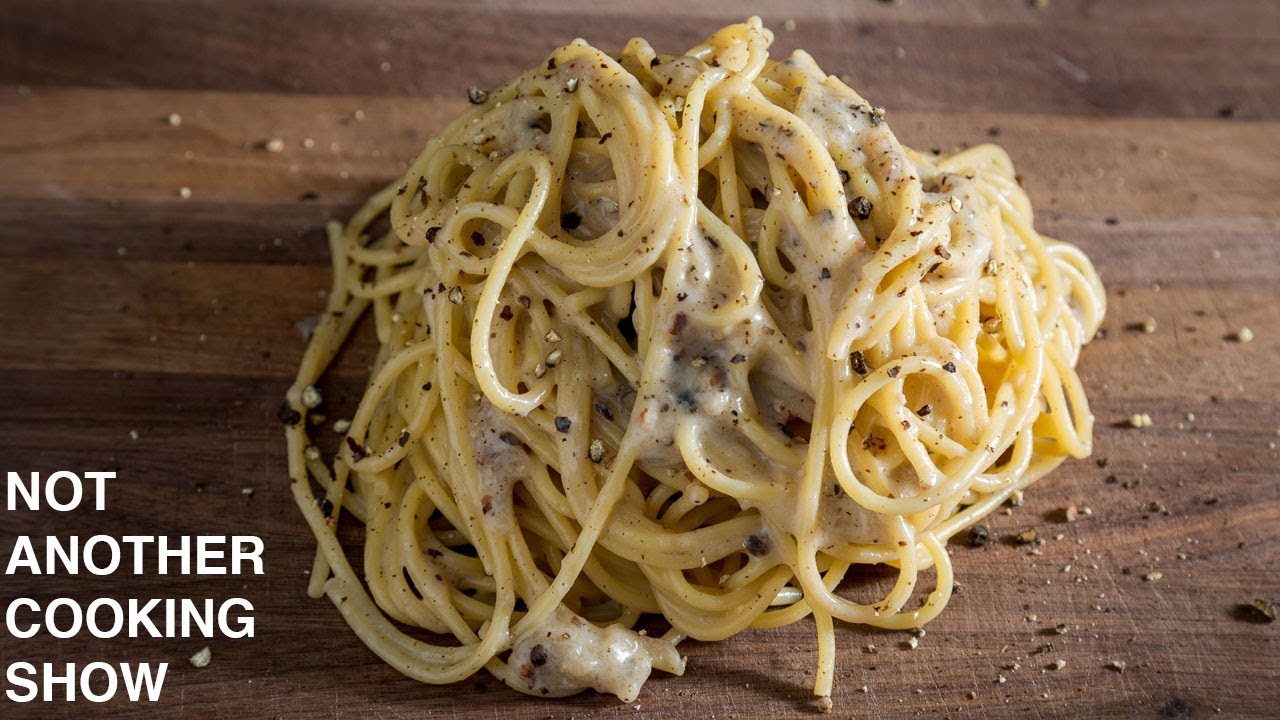
    Spaghetti is cooked and finished by combining finely grated Pecorino Romano with reserved pasta cooking water to form a cremina, then tossed with coarsely ground black pepper and the hot pasta until the cheese and pasta are blended. The dish uses only spaghetti (or tonnarelli), Pecorino Romano, black pepper, and salt for the pasta water.


    • thumb_up 701
    • visibility 24,809

    grocery Ingredients You'll Need

    • black pepper
    • pecorino romano
    • salt
    • spaghetti

    School of Rocco Cacio e Pepe (No Cream!) The right way.

    by Chef Rocco DiSpirito
    Advertisement modal-insights-video-details-345

    grocery Ingredients

    • 200g spaghetti (or tonnarelli)
    • 1 tsp black pepper, coarsely ground
    • 100g Pecorino Romano cheese, finely grated
    • Salt, to taste

    book_ribbon Instructions

    1. Bring the pasta water to a boil and add salt.
    2. Add the spaghetti to the boiling water without breaking it and cook until almost done.
    3. Grind 1 teaspoon of black pepper in a mortar and pestle into large pieces, exposing both the outer black skin and inner white pepper.
    4. Finely grate 100g (3.5 oz) Pecorino Romano with a fine grater (microplane) so it is very fine.
    5. Reserve a little of the hot pasta cooking water.
    6. In a bowl or pan, add a small amount of the reserved pasta water to the grated Pecorino and mix to form the cremina (cheese and water).
    7. Add the freshly ground black pepper to the cheese-and-water mixture.
    8. Add the cooked spaghetti to the cheese mixture and toss to combine; if there is extra water, finish tossing in the pan.
    9. Add a little more Pecorino as needed and toss until the cheese and pasta are blended (the "marriage").
    10. Serve.
  3. how to make REAL CACIO E PEPE like they do in ROME

    by NOT ANOTHER COOKING SHOW

    chef_hat Recipe Overview

    Pasta is cooked until al dente, tossed with toasted black pepper and finely grated Pecorino Romano, and emulsified with reserved pasta cooking water to create a creamy cacio e pepe sauce. The finished dish is served immediately.


    • thumb_up 45,007
    • visibility 2,273,128
    • Low Effort
    • Repeat Worthy

    grocery Ingredients You'll Need

    • black pepper
    • pasta
    • pasta cooking water
    • pecorino romano

    how to make REAL CACIO E PEPE like they do in ROME

    by NOT ANOTHER COOKING SHOW

    crowdsource Community Insights

    This recipe comes together quickly but there are two things people kept running into. First, the cheese can go stringy and clump if the pan or the reserved pasta water is too hot, or if too much water is added at once. People who let the water cool a bit and added it slowly into the cheese ended up with a much smoother sauce. Second, watch the salt: a salty pot of pasta water can make the finished dish too salty, so people who tasted as they assembled it avoided over-salting.

    military_tech Why This Recipe Stands Out

    • Low Effort: Comes together with minimal time or effort.
    • Repeat Worthy: People who make this tend to come back and make it again.
    Advertisement modal-insights-video-details-357

    grocery Ingredients

    • Pasta
    • Pecorino Romano cheese, finely grated
    • Black pepper
    • Pasta cooking water

    book_ribbon Instructions

    1. Bring a large pot of water to a boil and cook the pasta until al dente; reserve some of the pasta cooking water before draining.
    2. Toast coarsely cracked black pepper in a dry pan until fragrant.
    3. Finely grate Pecorino Romano.
    4. Make a creamy sauce by combining grated Pecorino Romano with a small amount of the reserved hot pasta cooking water, stirring to create an emulsion.
    5. Add the drained pasta to the pan with the toasted pepper (or add the pepper to the cheese emulsion) and toss, adding more reserved pasta water as needed to coat the pasta in a creamy sauce.
    6. Serve immediately.
  4. The Creamiest Fettuccine Alfredo You’ll Ever Make (Restaurant-Quality) | Epicurious 101

    by Epicurious

    chef_hat Recipe Overview

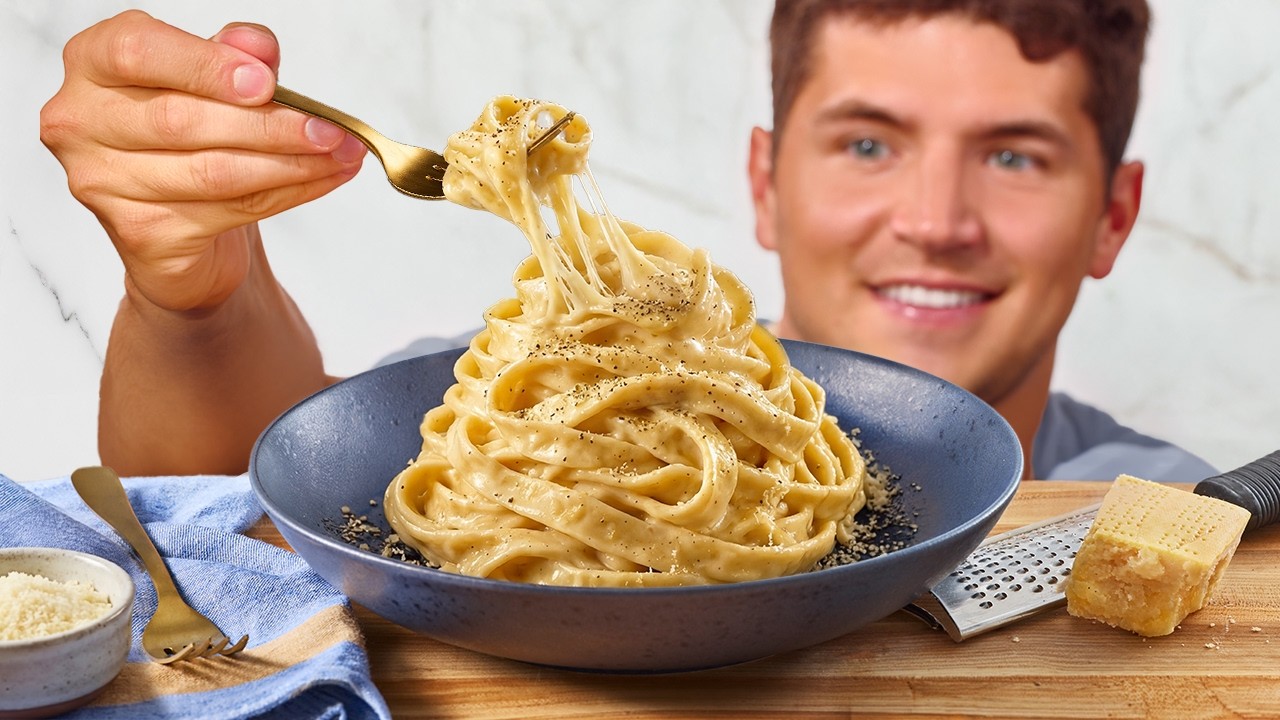
    Fettuccine Alfredo made by cooking dried fettuccine in a smaller pot of salted water until just past al dente, then emulsifying melted high‑fat unsalted butter with finely grated Parmigiano Reggiano and reserved starchy pasta water in a glass bowl until a creamy sauce forms, and serving immediately with extra cheese available.


    • thumb_up 26,765
    • visibility 1,123,113
    • Repeat Worthy

    grocery Ingredients You'll Need

    • fettuccine
    • parmigiano-reggiano
    • salt
    • unsalted butter
    • water

    The Creamiest Fettuccine Alfredo You’ll Ever Make (Restaurant-Quality) | Epicurious 101

    by Epicurious

    crowdsource Community Insights

    This sauce can go from creamy to grainy fast, most people who made it ran into two big problems: too much cheese (the sauce became overly cheesy or clumped) and overheating, especially when microwaving, which made the sauce break. The ones who avoided that generally used noticeably less cheese and kept the sauce from getting too hot. Also, people tended to prefer real, aged grated cheeses over pre-grated or processed Parmesan for a smoother result. Those three choices are the quickest way to dodge a gluey, over-cheesy finish.

    military_tech Why This Recipe Stands Out

    • Repeat Worthy: People who make this tend to come back and make it again.
    Advertisement modal-insights-video-details-200

    grocery Ingredients

    • 1 lb (454g) fettuccine, dry, boxed
    • 3/4 lb (340g) Parmigiano Reggiano, finely grated
    • 1 lb (454g) unsalted butter, high-fat (or Plugrá, Kerrygold, European-style unsalted butter)
    • Salt, to taste
    • Water, boiling

    book_ribbon Instructions

    1. Grate the Parmigiano Reggiano very finely with a microplane; if you don't have a microplane, grate on a box grater and sift or strain out large pieces.
    2. Bring a smaller-than-usual pot of water to a boil and add a little bit of salt (use less water than typical so the cooking water is extra starchy).
    3. Cook the dried fettuccine in the boiling, salted water until just past al dente.
    4. Prepare a glass bowl and begin to melt the unsalted butter in it; use a glass bowl rather than metal so the bowl holds heat and does not disperse it.
    5. Turn off the pot heat, lift the pasta out of the water, let it drain for about a second (do not fully drain or use a colander), and transfer the pasta directly into the melted butter so some pasta water remains clinging to the pasta.
    6. Continuously stir the pasta, butter, and starchy pasta water to begin emulsifying them.
    7. Gradually add the finely grated Parmigiano Reggiano while stirring constantly, adding more cheese as desired and more reserved pasta water a little at a time to loosen the sauce and make it look creamy.
    8. Continue stirring until the butter, cheese, and pasta water emulsify into a tight, creamy sauce (do not overheat or use direct heat or a metal bowl, which can cause the sauce to break into oily fat and curdled solids).
    9. Taste and, if desired, offer extra grated Parmigiano Reggiano at the table.
    10. Plate and serve immediately in small portions.
  5. How to Make Authentic Cacio e Pepe Pasta: No Cream, All Flavor

    by Vincenzo's Plate

    chef_hat Recipe Overview

    Cacio e pepe made by toasting freshly ground black pepper, cooking thick spaghetti in minimal water to produce very starchy pasta water, stirring the pasta in a peppered pan until the water reduces to a syrup, then combining the pasta with a Pecorino Romano-and-hot-pasta-water cream off the heat and finishing with extra pecorino and cracked black pepper.


    • thumb_up 1,754
    • visibility 52,604
    • Repeat Worthy

    grocery Ingredients You'll Need

    • black pepper
    • pecorino romano
    • spaghetti
    • water

    How to Make Authentic Cacio e Pepe Pasta: No Cream, All Flavor

    by Vincenzo's Plate

    crowdsource Community Insights

    This one mostly hinges on heat and motion. People who let the pan and pasta cool a little before adding the cheese, and who kept the mixture moving so no part stayed on hot metal, avoided the lumpy, gluey mess that caught others. Cooks who treated the cheese gently and avoided cooking it in the pan got a much smoother sauce. If you want a toasty pepper flavor, some people toast whole peppercorns first, but they warn you not to burn them. In short: cool things down a bit and stir constantly when you add the cheese to dodge clumping.

    military_tech Why This Recipe Stands Out

    • Repeat Worthy: People who make this tend to come back and make it again.
    Advertisement modal-insights-video-details-336

    grocery Ingredients

    • 250g spaghettoni quadrati, thick spaghetti (or normal spaghetti, tagliolini)
    • 125g Pecorino Romano, finely grated (or Parmesan)
    • Black pepper, freshly ground
    • Water (or extra virgin olive oil)

    book_ribbon Instructions

    1. Finely grate the Pecorino Romano until it resembles snow.
    2. Grind fresh black pepper.
    3. Fill a large pot with only enough water to cook the pasta (use less water than usual so the water becomes very starchy); do not add salt to the water.
    4. Bring the water to a boil and add the pasta. Cook the pasta 2 minutes less than the packet instructions for an al dente finish (for example, if the packet says 13 minutes, cook 11 minutes).
    5. While the pasta cooks, place a large pan over low heat, add the freshly ground black pepper, and gently toast it for 1–2 minutes, tossing frequently and keeping the flame low.
    6. Add a splash of pasta water to the toasted pepper, scrape the bottom of the pan so the pepper doesn't burn, add a little more pasta water if needed, and keep the pan warm or remove from heat as needed.
    7. Reserve about 1 mug of the starchy pasta water before transferring the pasta from the pot.
    8. Using tongs, transfer the pasta from the pot into the pan with the toasted pepper.
    9. Finish cooking the pasta in the pan over medium-high heat for about 2 minutes, tossing constantly (risottare) and adding reserved pasta water as needed until the liquid reduces to a syrupy, thick consistency.
    10. In a small bowl, combine the finely grated Pecorino Romano with a splash of hot pasta water, adding the water little by little and mixing with a fork until you have a smooth, thick cheese cream.
    11. Turn off the heat, add the cheese cream to the pan with the pasta, then place the pan on top of the pasta pot (removed from heat) so steam helps melt the cheese; stir and toss quickly to combine everything into a creamy sauce without becoming stringy.
    12. Finish with extra grated Pecorino Romano and more freshly ground black pepper, tossing well.
    13. Serve immediately: twirl the pasta into a neat mound on a plate, spoon any extra sauce from the pan over the pasta, and top with additional pecorino and cracked black pepper.
  6. Fettuccine Alfredo – You Suck at Cooking (episode 121)

    by You Suck At Cooking

    chef_hat Recipe Overview

    Fettuccine is cooked in heavily salted boiling water, then transferred hot onto room-temperature chopped butter and combined with finely grated Parmesan in two additions so the butter and cheese melt into an Alfredo sauce. The transcript also measures 3/4 cup cream (not added explicitly) and allows optional black pepper or hot sauce.


    • thumb_up 124,949
    • visibility 2,696,451

    grocery Ingredients You'll Need

    • black pepper
    • butter
    • cream
    • fettuccine pasta
    • hot sauce
    • Parmesan cheese
    • salt

    Fettuccine Alfredo – You Suck at Cooking (episode 121)

    by You Suck At Cooking

    crowdsource Community Insights

    This version turns out very rich, most people who made it called it heavy and on the unhealthy side, so don't be surprised if it feels like a rich indulgence. People consistently found that cutting back on the butter and Parmesan keeps it from being overpowering; those who reduced both liked the result better. If you want a different texture or less butter flavor, some cooks swapped in vegetable oil, and some melted garlic into the fat before mixing for extra flavor. Expect a bold, buttery finish and plan to tone it down if you want something lighter.

    Advertisement modal-insights-video-details-216

    grocery Ingredients

    • 1 lb (454g) fettuccine, fresh or dry (or spaghetti, lasagna noodle)
    • 1/2 lb (227g) butter, room temperature, chopped
    • 5000000000 nanogram Parmesan, finely grated
    • 3/4 cup cream
    • Salt, to taste
    • Black pepper
    • Hot sauce

    book_ribbon Instructions

    1. For every 1 pound of pasta use 1/2 pound butter and 1/2 pound Parmesan (metric equivalence stated: for 1 kilogram pasta use 500 grams butter and 5,000,000,000 nanograms Parmesan).
    2. Remove the butter from the fridge and let it come to room temperature.
    3. Grate the Parmesan on the smallest setting until it becomes a fluffy, finely grated pile.
    4. Fill a large pot with water, salt it heavily, and bring it to a rolling boil.
    5. Add the fettuccine to the boiling water, return to a gentler boil, and cook for a few minutes; check the package directions for cooking time.
    6. Chop the room-temperature butter and spread it out in a bowl; if the butter is too firm, microwave briefly to soften.
    7. Transfer the pasta directly from the pot into the bowl on top of the butter so some of the cooking liquid comes along.
    8. Measure 3/4 cup cream (the transcript instructs to take this amount).
    9. Add half of the grated Parmesan to the pasta and butter, stir until it melts, then add the remaining half and combine so the butter and Parmesan form the Alfredo sauce.
    10. Optionally add black pepper or hot sauce to taste.
  7. The Best Mac and Cheese You’ll Ever Make (Restaurant-Quality) | Epicurious 101

    by Epicurious

    chef_hat Recipe Overview

    Grated Cheddar and Gouda are melted into heated milk with sodium citrate to create a smooth, emulsified cheese sauce that is blended with cream and butter; al dente elbow pasta is folded into the sauce and finished with a garlic-and-butter toasted panko breadcrumb topping, assembled without baking.


    • thumb_up 17,428
    • visibility 737,625
    • Low Effort

    grocery Ingredients You'll Need

    • black pepper
    • butter
    • cayenne pepper
    • cheddar cheese
    • cream
    • elbow macaroni
    • garlic

    The Best Mac and Cheese You’ll Ever Make (Restaurant-Quality) | Epicurious 101

    by Epicurious

    crowdsource Community Insights

    People who made this found the sauce holds together best when you actually make a proper roux and don’t skip that step, the ones who skipped it usually wished they hadn’t. Baking the dish at the end gives the dish those caramelized, slightly chewy edges people liked, and if you want a really crisp top some people finish it under the broiler for a minute or two. One clear mistake: adding onion powder or fresh onions tended to throw the flavor off, while the cooks who left them out were happier with the result.

    military_tech Why This Recipe Stands Out

    • Low Effort: Comes together with minimal time or effort.
    Advertisement modal-insights-video-details-231

    grocery Ingredients

    • Cheddar, grated
    • Gouda, grated; rind removed
    • Parmesan, freshly grated
    • Elbows
    • Butter
    • Garlic
    • Panko breadcrumbs
    • Salt, to taste
    • Onion
    • Black pepper
    • Paprika
    • Cayenne
    • Milk
    • Sodium citrate, to taste (or American cheese)
    • Cream

    book_ribbon Instructions

    1. Prep the cheeses: grate the Gouda (remove the brown rind first) and grate the block of Cheddar; set the freshly grated Parmesan aside.
    2. Cook the pasta: bring a pot of water to a rolling boil, add a fair amount of salt, add the elbow pasta to the boiling water, stir occasionally to prevent sticking, and cook until al dente; test by tasting.
    3. Lift the cooked pasta with a spider and place it on a flat tray to cool quickly; do not rinse the pasta.
    4. Make the topping: heat a pan over medium heat and add butter; as the butter melts add the garlic and cook until fragrant, then add the panko breadcrumbs, salt, black pepper, paprika, and cayenne and stir, shaking so they don't burn; shut off the heat, spread the toasted breadcrumbs onto a tray to stop cooking, and set aside.
    5. Make the sauce: heat a pan over medium heat and add butter, then add the onions with a pinch of salt and cook until translucent but not brown; add the garlic after the onions have started to soften.
    6. Add all the milk to the pan with the onions and heat to a light simmer; add the sodium citrate and a little black pepper and let the sodium citrate dissolve.
    7. Whisk in the grated cheeses gradually, sprinkling and whisking as you go so the milk stays hot and the cheese melts instead of cooling the liquid; continue until the sauce has thickened with the cheese.
    8. Finish the sauce: add the cream and the last of the butter and blend with a stick blender to smooth the sauce; if the sauce seems too thick you may add a little milk.
    9. Assemble: lower the heat so the sauce won't scorch, stir the cooked pasta into the hot cheese sauce until heated through (some sauce will be absorbed), transfer to a serving container, and top with the prepared toasted breadcrumb topping.
    10. Serve and taste.
  8. Best Fettuccine Alfredo You’ll Ever Make (Easy)

    by Nick's Kitchen

    chef_hat Recipe Overview

    Fresh egg pasta dough is made with whole eggs and additional yolks, kneaded until smooth, rested, rolled thin on a pasta machine and cut into fettuccine; an Alfredo sauce of butter, minced garlic, warmed half-and-half and grated Parmesan is prepared separately, then the fresh fettuccine is cooked briefly, tossed with the sauce and a splash of pasta water, finished with freshly cracked pepper and extra Parmesan, and plated.


    • thumb_up 41,455
    • visibility 2,766,067
    • Budget Friendly
    • Repeat Worthy

    grocery Ingredients You'll Need

    • black pepper
    • butter
    • egg
    • egg yolk
    • flour
    • garlic
    • half-and-half

    Best Fettuccine Alfredo You’ll Ever Make (Easy)

    by Nick's Kitchen

    crowdsource Community Insights

    This dish hinges on three things people learned the hard way. First, temperature control matters, a too-hot pan burns the butter and wrecks the sauce, so go gently and don’t rush. Second, the simple combo of butter, Parmesan, and a splash of pasta water is what pulls it together; people who kept it to those ingredients (and skipped cream) got the best texture. And third, don’t add garlic; people who threw garlic in later said it didn’t belong for this version. Do those and you’ll be following what worked for people who actually made it.

    military_tech Why This Recipe Stands Out

    • Budget Friendly: Commonly mentioned as cheap to make.
    • Repeat Worthy: People who make this tend to come back and make it again.
    Advertisement modal-insights-video-details-204

    grocery Ingredients

    Pasta dough

    • Flour
    • 2 eggs
    • 4 egg yolks, separated
    • Water

    Alfredo sauce & finishing

    • 1 clove garlic, minced
    • Butter, hunk
    • Half and half
    • Parmesan cheese, large block
    • Salt, to taste
    • Black pepper, freshly cracked

    book_ribbon Instructions

    Pasta dough

    1. Measure out ingredients for the dough: flour, 2 whole eggs, and 4 additional yolks; confirm you have at least 171 gram of eggs total and, if under 171 gram, add a touch of water until you exceed that amount.
    2. Dump the flour onto a cutting board and use the base of a bowl to form a well in the center.
    3. Pour the whole eggs and separated yolks into the well and use a fork to puncture the yolks and whisk the eggs until combined, taking care not to break the sides of the flour well.
    4. Gradually pull in the edges of the flour into the egg mixture bit by bit until the mixture thickens and you can bring it all together into a shaggy dough.
    5. Use a bench scraper as needed to incorporate remaining flour and then use your hands to press and bring the mixture together until it forms a dough.
    6. Knead the dough by folding it over itself and pressing with the palm of your hand for about 5 to 10 minutes or until the dough is smooth and elastic; note that sometimes only 1 to 1.5 minutes may be needed, and test readiness by pressing a finger — if it springs back, the dough is worked enough.
    7. Wrap the dough in plastic wrap and let it rest at room temperature for at least an hour, up to three hours.

    Roll and cut fresh pasta

    1. After resting, cut off a small portion of the dough to roll so you can keep the remainder wrapped.
    2. Dust the dough and the pasta machine attachment with plenty of flour and press the dough into a thin strip by hand or with a rolling pin or bottle.
    3. On the pasta machine's widest (lowest) setting, feed the strip through and let the rollers pull it; between each pass dust with flour, rub flour into cracks, flip the sheet, and use the backs of your hands to handle the dough without poking holes.
    4. Progressively tighten the machine to thinner settings, feeding the sheet through and laying it down to rest between passes, until you can see your hand through the pasta and it is as thin as you want.
    5. Attach the fettuccine cutter (or cut by hand) and feed the sheet through to cut fettuccine; trim and dust with flour, then twirl portions into nests and set on a board until ready to cook.

    Make Alfredo sauce

    1. Start a pot of boiling water and salt it generously.
    2. In a pan over medium heat, add the hunk of butter and, once melted, add the minced garlic and cook, stirring, until aromatic.
    3. Add the half-and-half and stir to warm it through; do not bring the mixture to a boil — keep it warm enough to melt cheese and watch for bubbling at the edges.
    4. When the cream is bubbling at the edges, reduce heat to low and grate the Parmesan cheese directly into the pan, stirring as you add it until the sauce thickens and becomes smooth and creamy to the desired consistency.

    Cook pasta and finish

    1. Cook the fresh fettuccine in the boiling, well-salted water; fresh pasta cooks in about 60 seconds — wait until the pasta floats, then cook about 15 to 20 more seconds before removing.
    2. Immediately transfer the hot pasta into the Alfredo sauce, add a tiny splash of the reserved pasta cooking water, and add fresh cracked pepper.
    3. Toss and mix until the sauce is smooth and coats the pasta.
    4. Plate by twirling portions into a roll, finish with a dusting of additional Parmesan and a light touch of freshly cracked pepper, and serve.
  9. Babish’s Secret to Perfect Cacio e Pepe | Epicurious 101

    by Epicurious

    chef_hat Recipe Overview

    This Cacio e Pepe emulsifies grated Pecorino Romano and Parmigiano-Reggiano with butter-toasted black peppercorns and starchy pasta cooking water in a blender to create a stable, creamy sauce. The blended sauce is tossed with pasta cooked 9 to 11 minutes and finished with additional grated cheese and cracked pepper.


    • thumb_up 17,321
    • visibility 772,825

    grocery Ingredients You'll Need

    • black peppercorns
    • butter
    • parmigiano-reggiano
    • pasta
    • pecorino romano
    • salt
    • water

    Babish’s Secret to Perfect Cacio e Pepe | Epicurious 101

    by Epicurious

    crowdsource Community Insights

    This comes together fast, but people who made it found three things matter. First, butter was a problem: folks who used butter (especially unsalted or to toast pepper) ended up with off results, while the ones who skipped it had a cleaner finish. Second, putting boiling pasta water straight into the cheese caused clumping, letting the water cool a bit before mixing kept the sauce smooth. And third, blending the pasta destroyed the texture for many; the no-mixer method is what people stuck with when it worked out. Remembering those makes it come together a lot better.

    Advertisement modal-insights-video-details-333

    grocery Ingredients

    • Pasta
    • Water, salted
    • Salt, to taste
    • Butter
    • Black peppercorns
    • Pecorino Romano, grated
    • Parmigiano-Reggiano, grated

    book_ribbon Instructions

    1. Bring a pot of salted water to a boil and cook the pasta until done, about 9 to 11 minutes.
    2. Reserve some hot pasta cooking water before draining.
    3. While the pasta cooks, heat butter in a wide shallow pan over very low heat until foamy.
    4. Add black peppercorns to the butter and warm/toast gently; do not brown the butter or burn the peppercorns. Be generous with the pepper.
    5. Toss the cooked pasta with the butter and toasted peppercorns to coat and keep the strands from sticking.
    6. Grate Pecorino Romano and Parmigiano-Reggiano and put the cheeses into the blender jar.
    7. Add the butter-and-pepper mixture (and any juices in the pan) to the blender with the cheeses.
    8. With the blender running, slowly stream in hot pasta cooking water until a thick, creamy sauce forms and emulsifies.
    9. Toss the blended sauce with the pasta using tongs, twisting to serve; grate more cheese and grind additional pepper over the top if desired.
    10. If the sauce thickens or becomes gloppy after sitting, add a splash of hot pasta cooking water to loosen it.
  10. Gordon Ramsay’s Ultimate Grilled Cheese Sandwich | Ramsay Around the World

    by Gordon Ramsay

    chef_hat Recipe Overview

    A grilled cheese sandwich made with long slices of Romano and Asiago (rinds removed) layered on thick country bread buttered on the outside, with a little homemade kimchi folded into the cheese, cooked on a hot oiled cooking surface over an open fire and pressed with a spatula until the cheese melts (two minutes per side).


    • thumb_up 80,988
    • visibility 5,960,900

    grocery Ingredients You'll Need

    • Asiago cheese
    • butter
    • country bread
    • kimchi
    • olive oil
    • pepperberry
    • Romano cheese

    Gordon Ramsay’s Ultimate Grilled Cheese Sandwich | Ramsay Around the World

    by Gordon Ramsay

    crowdsource Community Insights

    This comes together fast, and people who've made it found two things cause the most trouble: the cheese and the pan. People who used firmer, non-melty cheese ended up with solid pockets instead of a melted center, so cooks who had success chose soft, melty slices. What trips people up next is temperature, starting on a cold pan or turning the heat too high makes things go wrong. The ones who preheated to moderate heat got even browning and melted cheese; flip only once the bread is nicely browned, or you'll risk burning it.

    Advertisement modal-insights-video-details-547

    grocery Ingredients

    • Romano cheese, long slices, rind removed
    • Asiago cheese, long slices, rind removed
    • Pepperberry
    • Country bread, sliced, not too thin
    • Butter
    • Salt, to taste
    • Kimchi, homemade
    • Olive oil

    book_ribbon Instructions

    1. Cut long slices from the Romano and Asiago cheeses and remove the rinds; cut the slices in half lengthwise as desired.
    2. Slice the country bread into slices not too thin.
    3. Butter the outside of each bread slice heavily and season the outside with salt.
    4. Layer the cheese on one slice of bread, fold a little homemade kimchi and add it on top of the cheese, then press the sandwich together.
    5. Heat the cooking surface over the open fire with a touch of olive oil until it just starts to smoke.
    6. Place the sandwich on the hot surface, press it down, and cook for two minutes on one side.
    7. Flip the sandwich, cook for two minutes on the other side, then place the spatula on top and press down to help melt the cheese.
    8. Remove the sandwich from the heat, cut in half, and serve.